
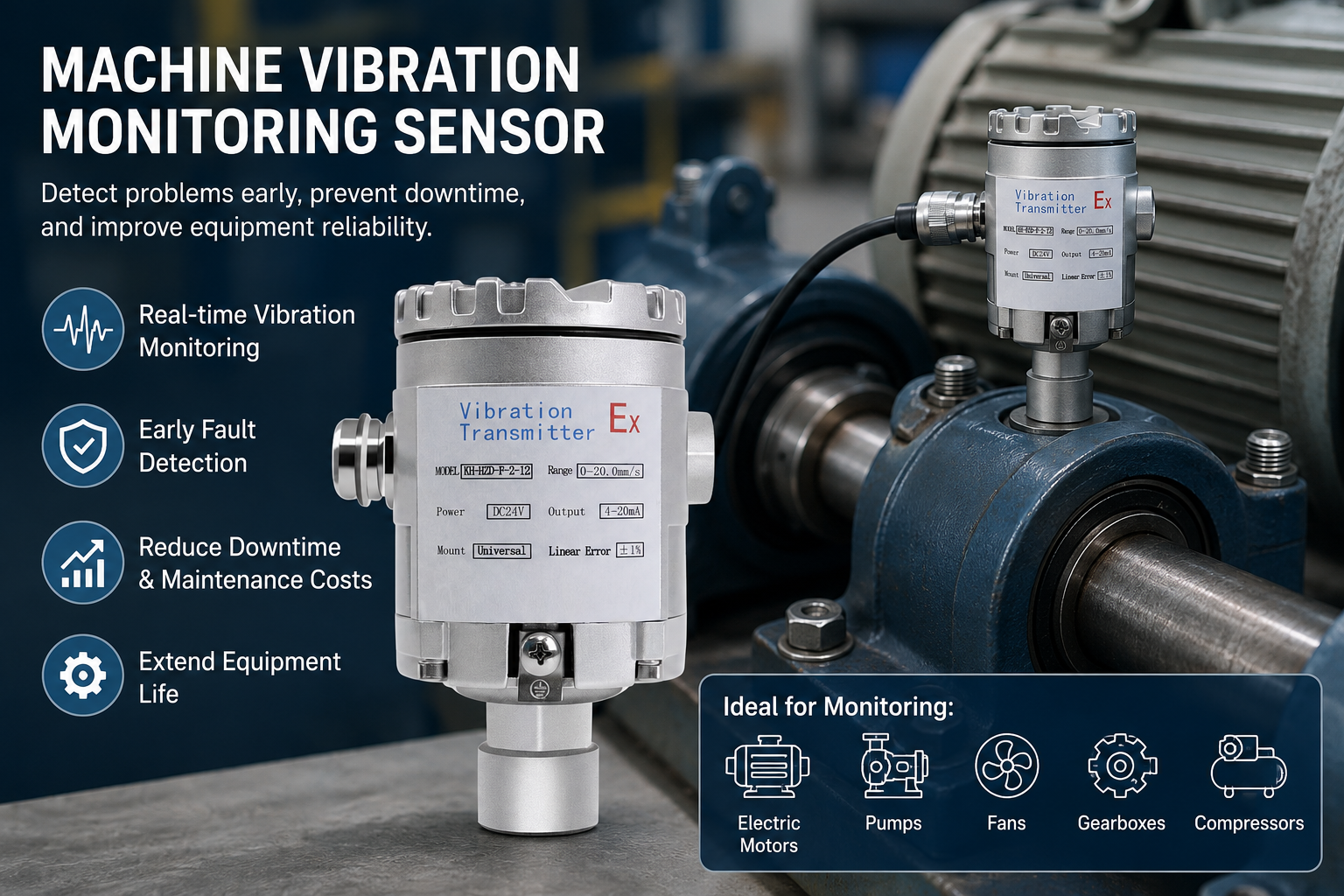
Machine vibration monitoring sensors are devices that measure the movement or vibration of rotating and moving equipment. They help identify changes in machine behavior before a small issue turns into an expensive breakdown.
These sensors are widely used in industries such as manufacturing, power generation, mining, oil and gas, food processing, and water treatment to keep equipment running safely and efficiently.
Instead of waiting for a machine to fail, maintenance teams use vibration sensors to detect early warning signs and schedule repairs at the right time.
Why Is Machine Vibration Monitoring Important?
Many machine failures don’t happen overnight. Components usually show small changes in vibration long before they stop working.
A vibration monitoring system helps you:
- Detect problems early
- Reduce unexpected downtime
- Lower maintenance costs
- Improve equipment reliability
- Extend machine service life
- Increase workplace safety
Early detection often means replacing an inexpensive bearing instead of repairing an entire motor or production line.
How Do Machine Vibration Monitoring Sensors Work?
The sensor is mounted on a machine where vibration is most noticeable, such as the bearing housing or motor casing.
It continuously measures movement and converts it into electrical signals. These signals are then sent to:
- Monitoring systems
- PLCs
- SCADA systems
- Condition monitoring software
- Cloud-based predictive maintenance platforms
If vibration levels exceed preset limits, the system can trigger an alarm so maintenance personnel can investigate before serious damage occurs.
Common Types of Machine Vibration Monitoring Sensors
Accelerometers
Accelerometers are the most commonly used vibration sensors.
They measure acceleration and are suitable for:
- Electric motors
- Pumps
- Fans
- Compressors
- Gearboxes
Advantages include:
- Wide frequency range
- High accuracy
- Compact size
- Easy installation
Velocity Sensors
Velocity sensors measure vibration speed and are commonly used for monitoring medium-speed rotating equipment.
They are often selected when vibration severity standards are based on velocity measurements.
Displacement Sensors
Displacement sensors measure the movement of a rotating shaft relative to its housing.
They are widely used for:
- Steam turbines
- Gas turbines
- Large compressors
- High-speed rotating machinery
These sensors are especially useful for monitoring shaft position and rotor behavior.
Where Are Vibration Sensors Installed?
Proper installation improves measurement accuracy.
Typical mounting locations include:
- Bearing housings
- Motor frames
- Pump casings
- Gearbox housings
- Fan bearings
- Compressor bodies
The sensor should be firmly attached to a clean, rigid surface to capture accurate vibration data.
What Problems Can Vibration Sensors Detect?
Machine vibration monitoring sensors can identify many common mechanical issues, including:
- Bearing wear
- Shaft misalignment
- Rotor imbalance
- Mechanical looseness
- Gear damage
- Coupling problems
- Bent shafts
- Cavitation in pumps
Finding these issues early helps prevent secondary damage to other machine components.
How to Choose the Right Machine Vibration Monitoring Sensor?
When selecting a sensor, consider:
- Machine type
- Operating speed
- Measurement range
- Frequency response
- Environmental conditions
- Mounting method
- Output signal compatibility
- Monitoring system requirements
Choosing a sensor that matches your equipment and maintenance goals will provide more reliable results over the long term.
Can Small Businesses Benefit from Vibration Monitoring?
Absolutely.
Modern vibration monitoring solutions are no longer limited to large industrial plants. Affordable wireless sensors and cloud-based monitoring platforms allow small and medium-sized businesses to monitor critical equipment without investing in complex infrastructure.
Even monitoring a few key machines can significantly reduce maintenance costs and unexpected production interruptions.
Final Thoughts
Machine vibration monitoring sensors are one of the most effective tools for predictive maintenance. By continuously tracking machine health, they help detect problems before failures occur, reducing downtime, lowering repair costs, and improving overall equipment reliability.
Whether you’re monitoring a single electric motor or an entire production facility, investing in the right vibration monitoring sensors can deliver long-term savings while keeping operations running smoothly.
Post time: 2026-07-04